The Enduring Historic Charm of California’s Oldest Hotels
California’s oldest hotels are more than places to spend the night—they are living pieces of the state’s history. Some began as Gold Rush-era saloons and stagecoach stops. Others rose from the ashes of devastating fires and earthquakes or welcomed generations of artists, entertainers, and world leaders. Together, they tell the story of California’s evolution from frontier outpost to global destination. For a century or more, these enduring landmarks have witnessed many of the state’s defining moments while continuously reinventing themselves for new generations. Rich with architectural character, stories, and a deep sense of place, they offer travelers something increasingly rare: the chance to experience California history firsthand.

The Groveland Hotel
Built in 1849, The Groveland Hotel was founded as the Garrote Hotel in a rough-and-tumble Gold Rush town known for frontier justice and a grim name that meant “death by strangulation.” Originally built as a trading post, the building quickly became a lodge for miners as well as a saloon, gambling hall, and brothel. When local residents sought a more respectable future, Garrote was renamed Groveland in 1875, and the hotel followed suit. The arrival of Yosemite-bound tourists and, later, engineers working on San Francisco’s Hetch Hetchy water project brought cycles of prosperity. Today, the hotel’s original adobe walls remain, while the renovated interiors blend Gold Rush-era charm with modern amenities. Local legend holds that a long-departed miner named Lyle still haunts Room 15, making it one of the property’s most requested accommodations.
The Upham Hotel
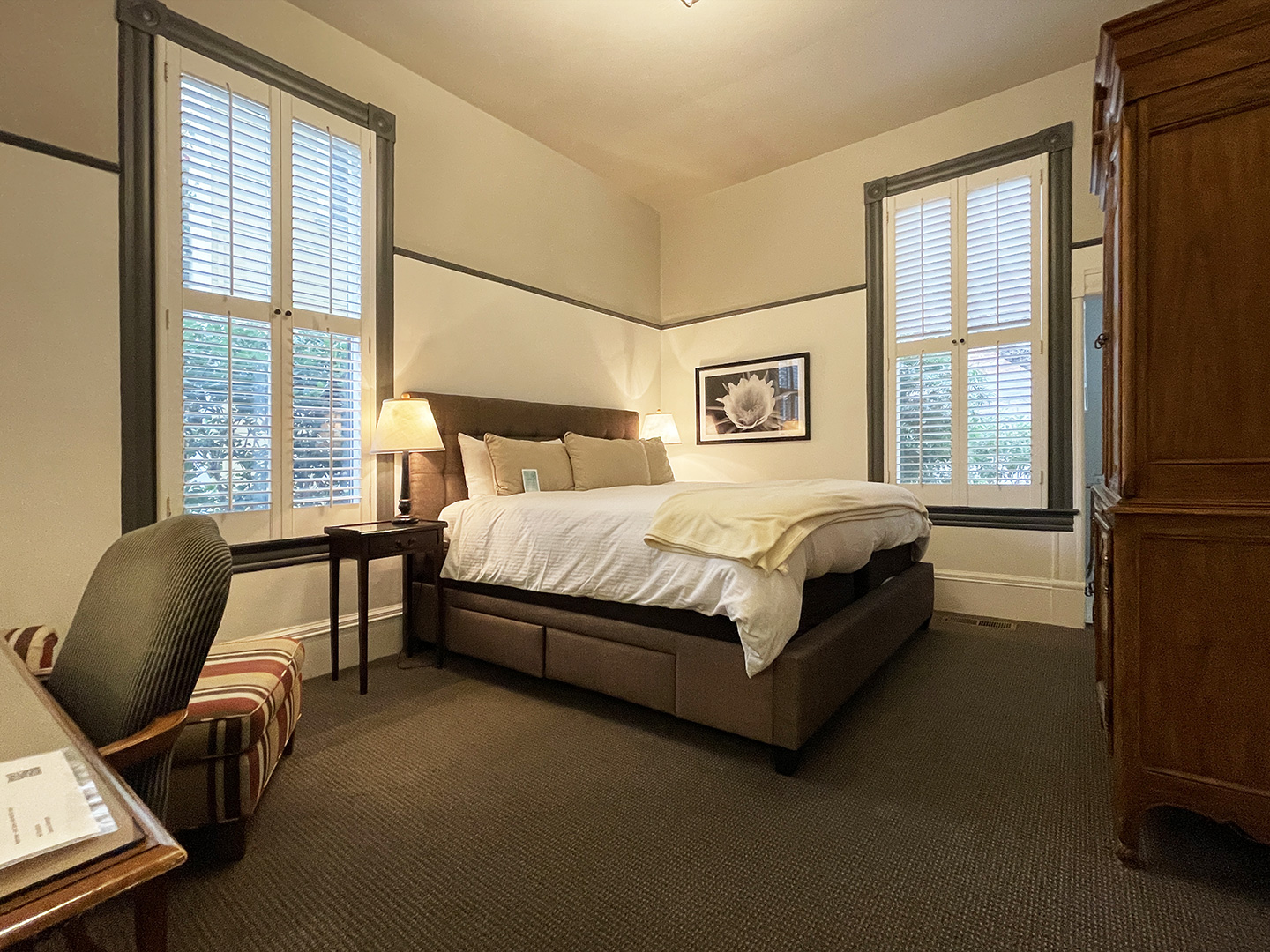
Opened in 1871 as the Lincoln House, The Upham Hotel is Santa Barbara’s oldest continuously operating hotel. Built by Amasa Lincoln, a distant cousin of Abraham Lincoln, the New England-style boarding house welcomed pioneer settlers arriving by horse, steamship, and on foot. As Santa Barbara grew, successive owners expanded and improved the property, including Cyrus Upham, who renamed it Hotel Upham in 1898. The landmark survived both the devastating 1925 Santa Barbara earthquake and the hardships of the Great Depression. Today, the 50-room boutique hotel preserves its historic character across the original main building, annex, and carriage house, along with seven secluded cottages tucked among lush gardens just two blocks from State Street.
Maison Fleurie
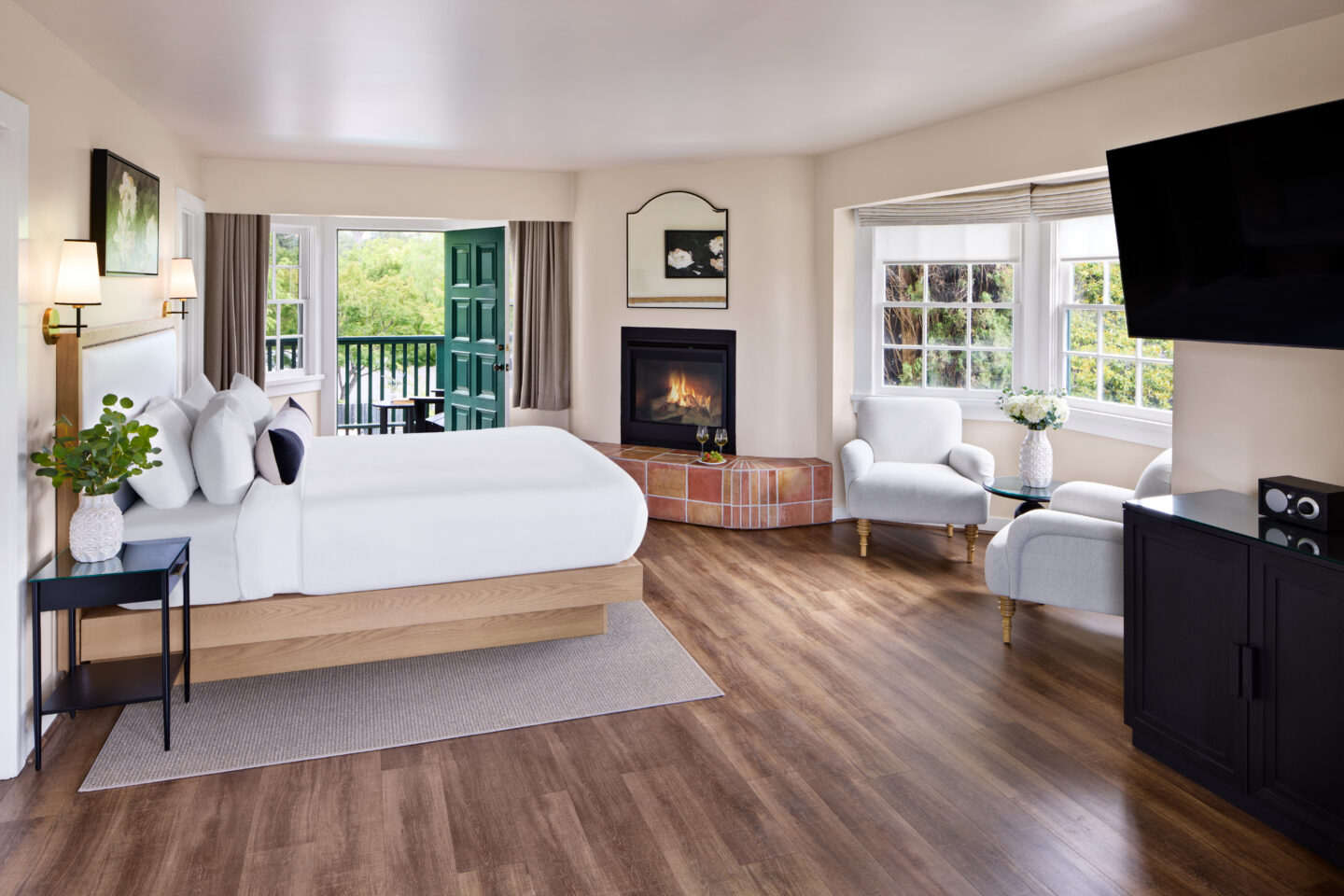
Built in 1873 as the Magnolia Hotel, Maison Fleurie is the oldest continuously operating hotel in Napa Valley. Constructed of local stone beside the railroad tracks in what would become Yountville, the hotel served over the years as a lodge, saloon, and rumored bordello. Over the years, the property acquired bricks from a demolished church and a balcony salvaged from San Francisco’s old French Hospital. The bricks remain on display in the dining room and historic fireplace, while the balcony still graces the building’s stone façade. After years of disrepair and abandonment, the landmark was carefully restored and reimagined as Maison Fleurie, meaning “flowering house.” Today, the 13-room boutique inn blends its rich past with French-inspired elegance, lush gardens, and newly revamped guest rooms just steps from Yountville’s acclaimed restaurants and tasting rooms.
The Monte Cristo
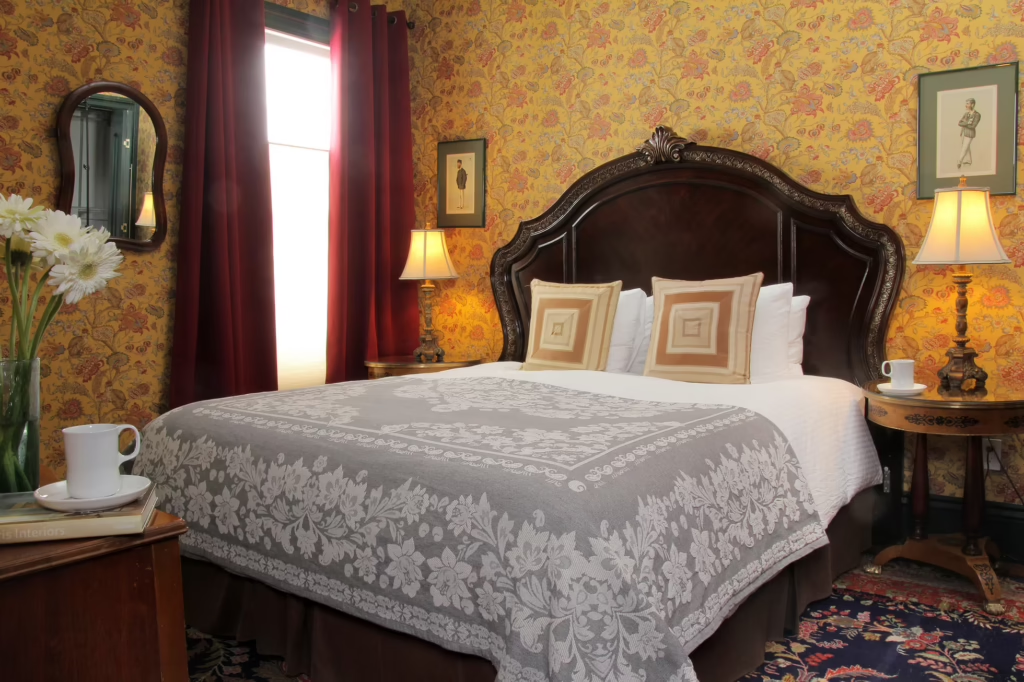
Originally built in 1875 as a bordello and saloon, The Monte Cristo is widely considered San Francisco’s oldest surviving hospitality building. It stood through the devastating 1906 earthquake and the fires that followed, serving as a refuge for residents left homeless by the disaster. During Prohibition, it became a speakeasy, and in the years that followed, San Francisco grew up around it. Many of the hotel’s original architectural details remain, including the façade, hardwood floors, high ceilings, and even some of the building’s hand-painted signage. Carefully restored in impeccable Victorian style, the hotel recreates the ambiance of a bygone era with Persian rugs, Bradbury & Bradbury wallpapers, intricate crown molding, vintage light fixtures, and exquisite antiques. Among the few nods to the 21st Century are the soundproofed rooms, Smart TVs, and luxurious marble bathrooms equipped with towel warmers and electronic bidets.
Tallman Hotel
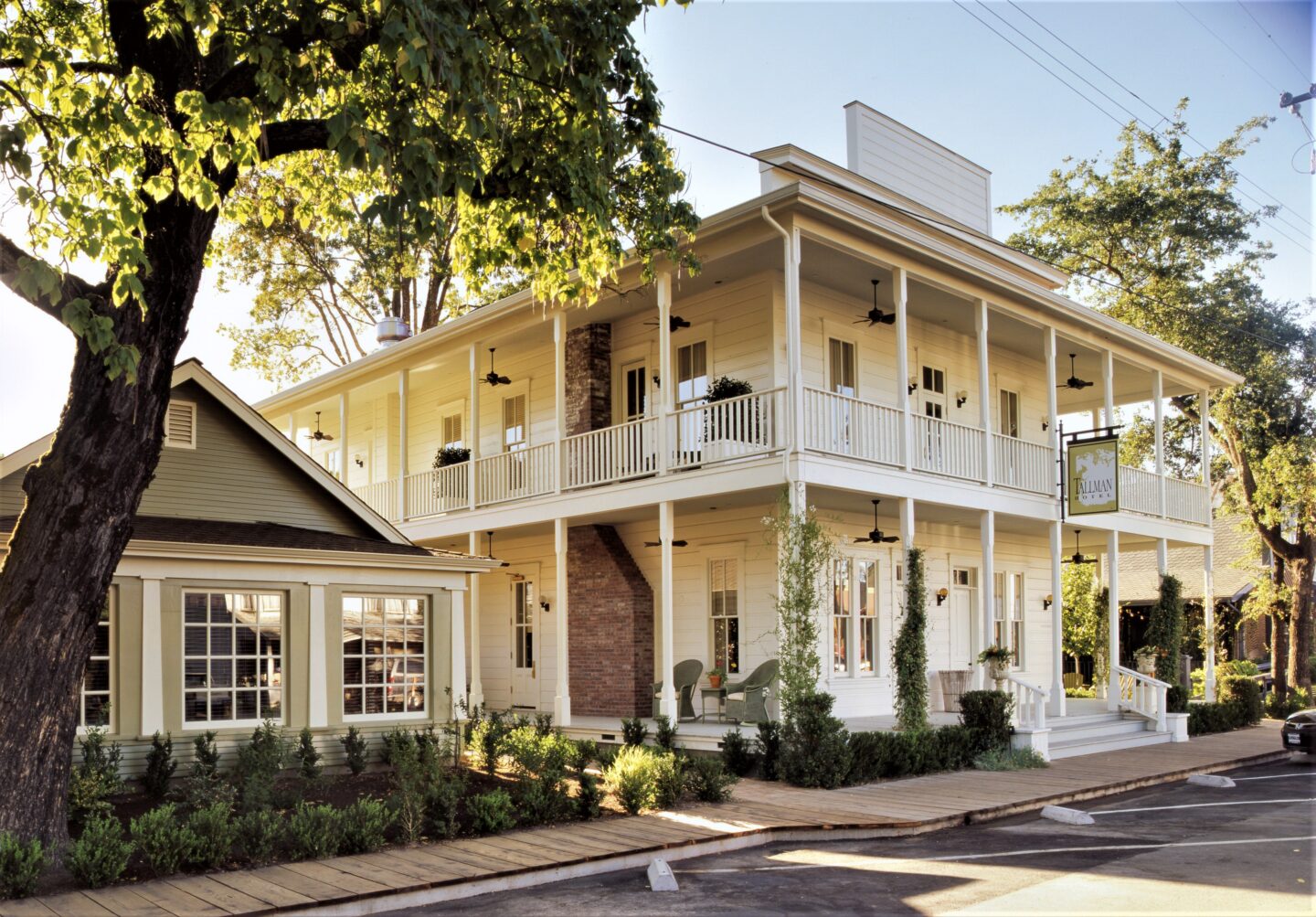
Built in the 1870s by pioneer settler Rufus Tallman, the Tallman Hotel welcomed well-heeled travelers who journeyed by stagecoach from Sacramento and San Francisco to soak in Lake County’s famed mineral springs. After the original hotel was destroyed by fire in 1895, the family rebuilt it. The Tallmans’ daughter and son-in-law later inherited it, renamed it Riffe’s Hotel, and continued to run it for decades. Next door, the family’s Blue Wing Saloon remained a popular gathering place until it was torn down during Prohibition. In the 1940s and 1950s, the hotel served as a boarding house and then a retirement home before standing vacant for 40 years. In 2003, new owners painstakingly restored the hotel to its original grandeur, salvaging many architectural details, including the original fir floors, staircases, and banisters. Today, the beautifully preserved hotel and the rebuilt Blue Wing Saloon honor Upper Lake’s stagecoach-era past while welcoming a new generation of travelers.
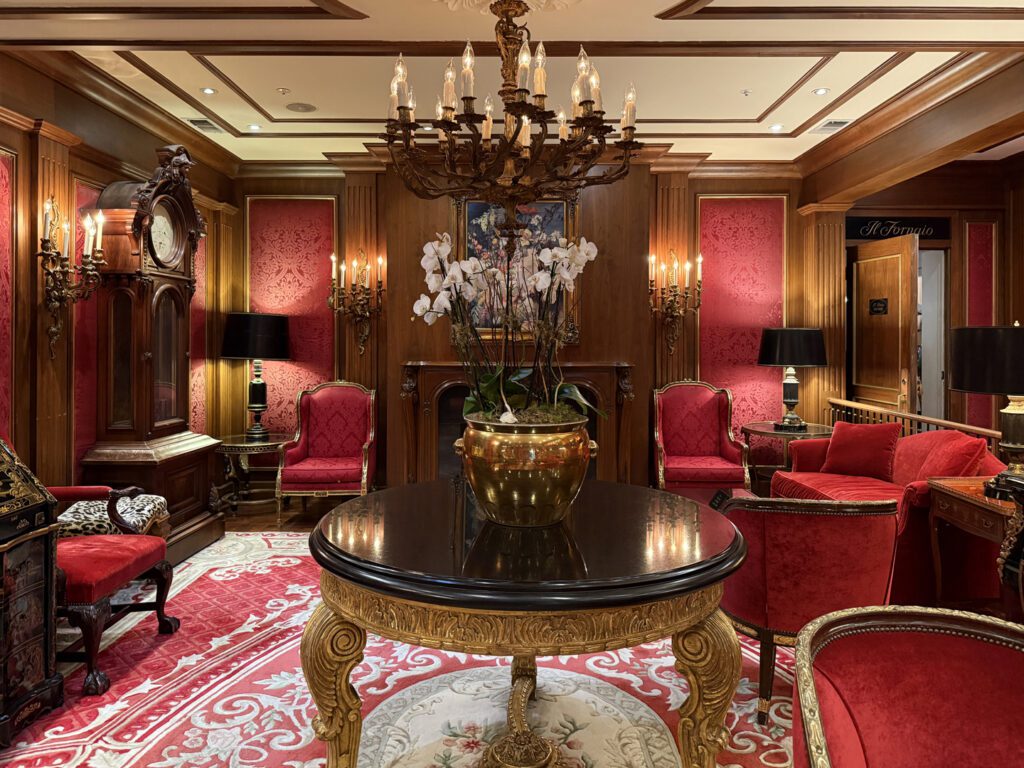
Pine Inn
Built in 1889 as the Hotel Carmelo, the Pine Inn is the oldest hotel in Carmel-by-the-Sea. It was constructed from wood salvaged from San Francisco’s Tivoli Opera House and originally stood several blocks from its present location. As the young town grew, the main building was dismantled and rolled down Ocean Avenue on pine logs before being rebuilt and enlarged as the Pine Inn in 1903. The hotel quickly became Carmel’s social center, hosting town dances, church services, Shakespeare readings, and literary gatherings. Today, the landmark remains at the heart of village life on Ocean Avenue, blending historic character with modern comforts just steps from Carmel’s shops, galleries, restaurants, and beach.
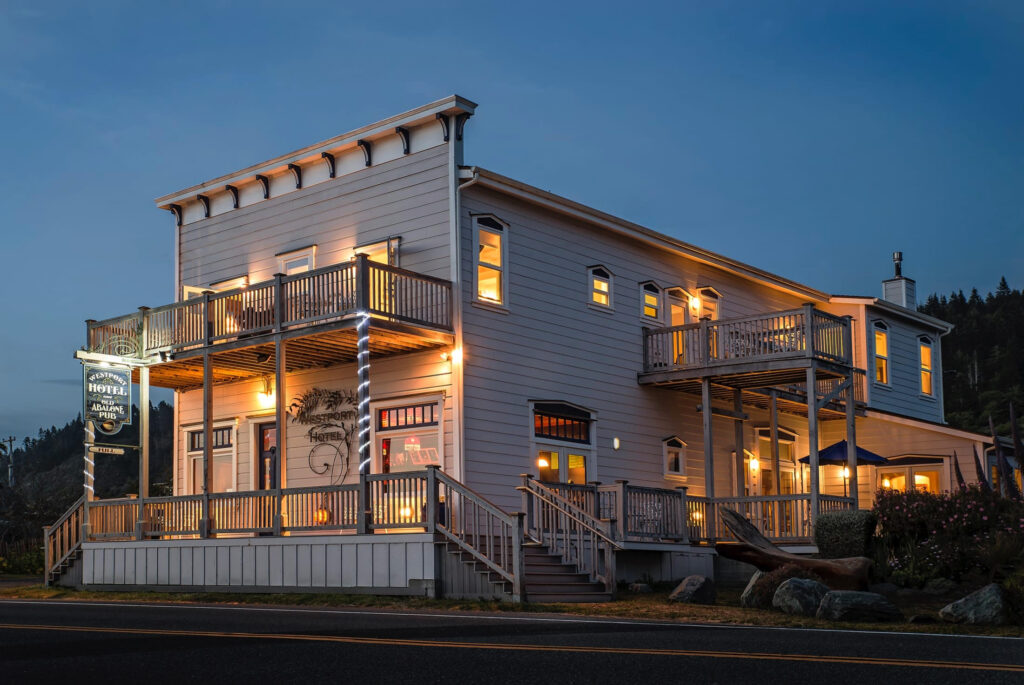
Westport Hotel
Built in 1890 during Westport’s logging boom, the Westport Hotel & Old Abalone Pub welcomed lumbermen, fishermen, and travelers navigating the rugged Mendocino Coast. Founded just a decade after the town itself, the Victorian hotel stood above a small but busy port where ships braved treacherous waters to carry redwood lumber to markets throughout California. Over the decades, the property underwent several incarnations before it was purchased in 2008 by longtime residents Lee Tepper and Dorine Real. The couple had worked at the hotel’s restaurant when they first moved to Westport in 1974 and sought to restore the historic character that had been stripped away over the years. Today, the beautifully preserved inn and cozy pub offer a memorable stop along California’s iconic Highway 1, overlooking one of the state’s most remote and dramatic stretches of coastline.
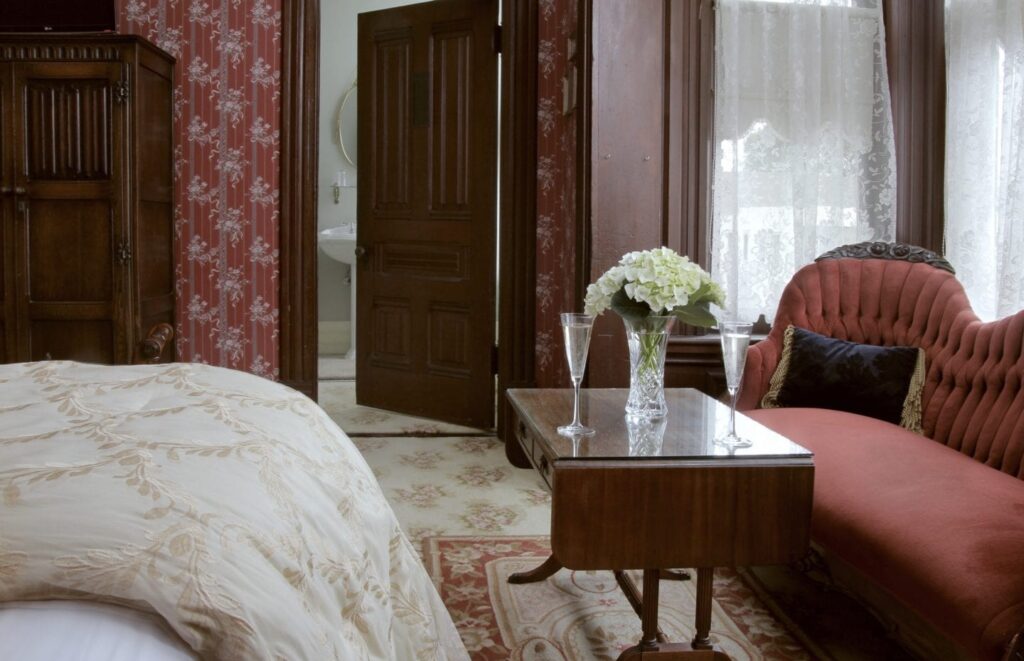
Victorian Inn
Built entirely of local redwood in 1890, the Victorian Inn stands as one of the crown jewels of Ferndale’s remarkably preserved Main Street. Designed by noted architect Thomas J. Frost, the grand Stick Style-Eastlake Victorian building showcases ornate bay windows, intricate millwork, Italianate detailing, and a distinctive mansard-style roofline. Constructed during Ferndale’s prosperous dairy and timber boom, the hotel has long stood at the heart of one of California’s best-preserved Victorian villages. Today, many of the hotel’s original architectural features remain, including soaring ceilings, redwood trim, vintage fixtures, and elegant bay windows that continue to evoke the grandeur of the late 19th century. The location is just steps from Ferndale’s charming shops and a short drive from Redwood National and State Parks.
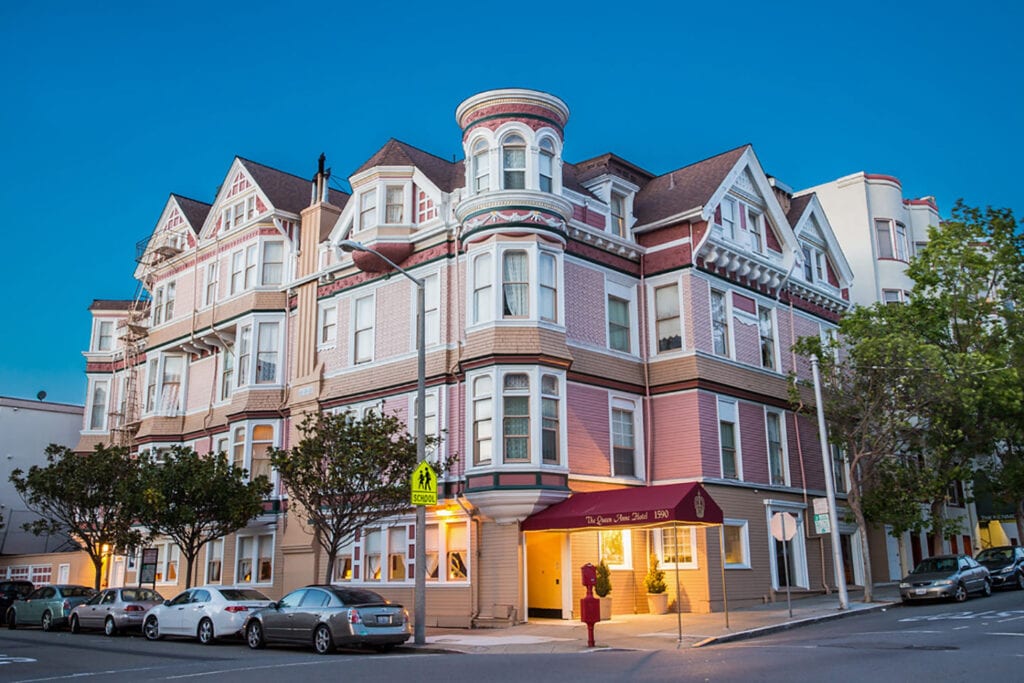
The Queen Anne Hotel
Built in 1890, The Queen Anne Hotel rose from the wealth generated by the Comstock Lode and originally served as Miss Mary Lake’s School for Girls, one of San Francisco’s most prestigious finishing schools. The grand Victorian building survived both the 1906 earthquake and the fires that followed, then entered a series of new chapters as a private gentlemen’s club and later as a property of the Episcopal Diocese. By the 1970s, the landmark had fallen into disrepair and was boarded up, only to be meticulously restored and reborn as a hotel in 1980. Today, crystal chandeliers, antique furnishings, etched-glass doors, and a grand staircase preserve the elegance of the Gilded Age, while afternoon tea and sherry continue a tradition of old-world hospitality in the heart of Pacific Heights.
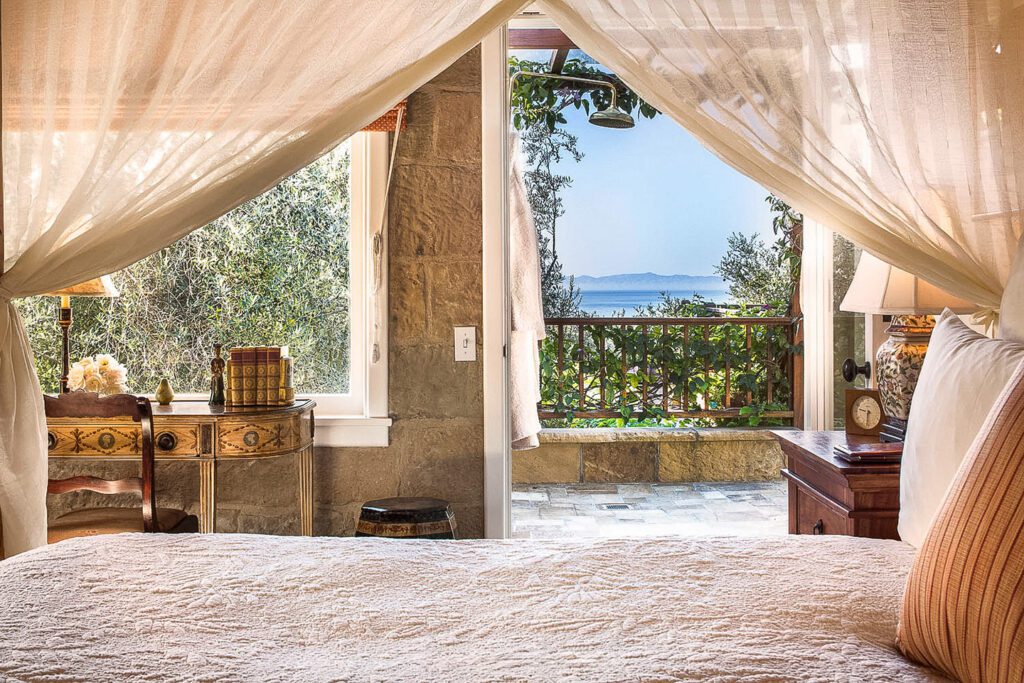
San Ysidro Ranch
Opened in 1893 on a former citrus ranch in the foothills of the Santa Ynez Mountains, San Ysidro Ranch has welcomed travelers for more than 130 years. The property’s roots stretch back even further. Mission Padres began farming the land in 1825, and a sandstone packing house built in 1889 survives today as the celebrated Stonehouse restaurant. During the Great Depression, actor Ronald Colman and former senator Alvin Weingand transformed the ranch into an exclusive retreat, beginning its long association with Hollywood and high society. Over the years, Winston Churchill, Audrey Hepburn, and countless luminaries sought refuge here, while John and Jacqueline Kennedy famously honeymooned in what is now known as the Kennedy Cottage. Today, the legendary hideaway remains one of California’s most storied luxury resorts, nestled among 550 acres of gardens, cottages, and coastal vistas.
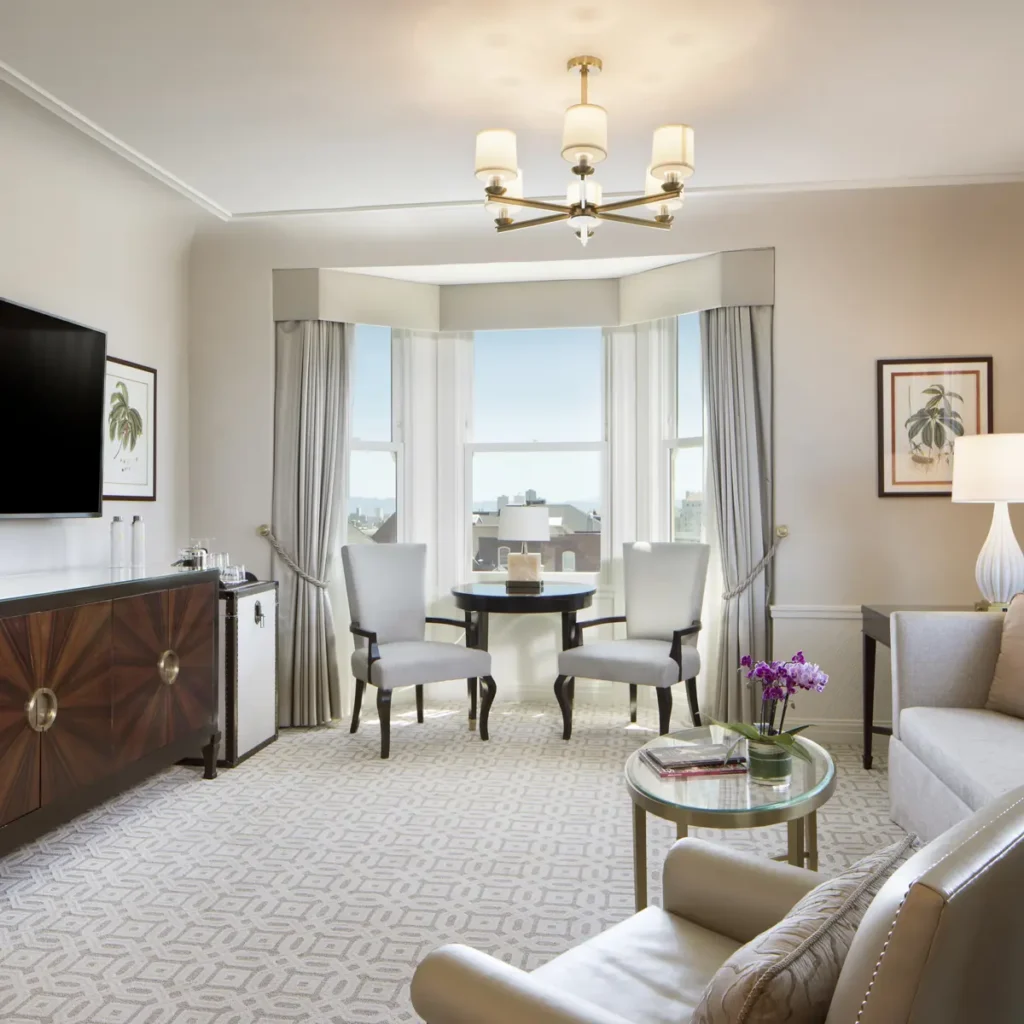
Hotel Drisco
Built in 1903 as the El Drisco, Hotel Drisco occupies a commanding perch in San Francisco’s prestigious Pacific Heights neighborhood. Originally conceived as a luxury hotel for travelers seeking sweeping views of the city and bay, its future changed dramatically after the 1906 earthquake left thousands homeless. The Edwardian building became a residential hotel, with many guests becoming long-term residents and shared living spaces replacing some of its original luxury accommodations. Decades later, the landmark returned to its hospitality roots, culminating in a meticulous renovation that integrated state-of-the-art systems while restoring its historic grandeur. Today, original architectural details—including hand-carved Honduran mahogany paneling, Ionic columns, grand bay windows, inlaid wood floors, decorative wainscoting, and the original brass rosette on the front door that inspired the hotel’s logo—preserve the hotel’s early 20th-century elegance while offering modern comforts in one of San Francisco’s most coveted neighborhoods.
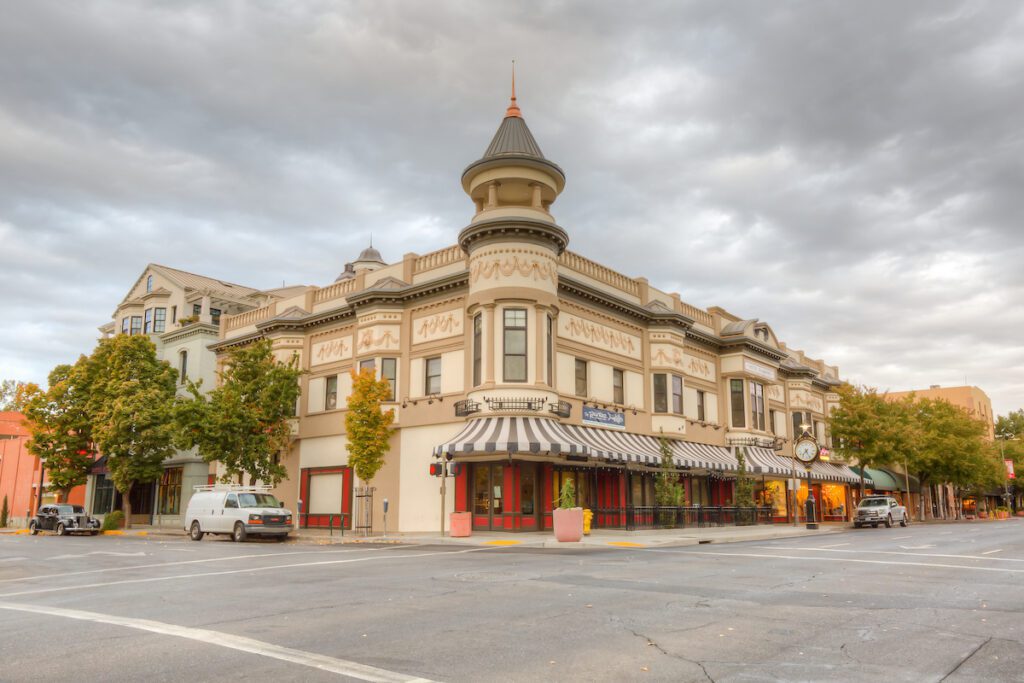
Hotel Diamond
When the Hotel Diamond opened in 1904, it was hailed as Chico’s first “strictly first-class” hotel. The grand three-story property featured steam heat, private baths, gas and electric lighting, a 200-seat dining room, and even one of Chico’s earliest automobiles—a Studebaker wagonette that ferried guests to and from the train depot. For a dozen years, the Diamond stood at the center of the city’s social life until a devastating fire in 1916 extinguished the lights. Over the decades, the building served as a feed store, a women’s dormitory, and various restaurants and bars before falling into abandonment and near ruin. A dedicated local family restored and reopened the landmark in 2005, marking the renewal of a local legacy. Today, guests can still spot original artifacts in the lobby, including a fire-scarred mirror, an antique couch, and a chandelier that connects the restored hotel to its early-20th-century roots.
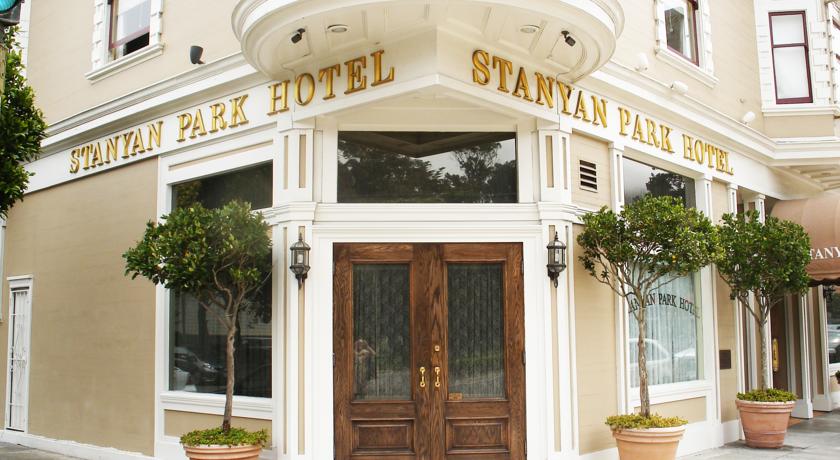
Stanyan Park Hotel
Built in 1904 across from Golden Gate Park, the Stanyan Park Hotel was designed to be the most elegant and fashionable hotel bordering the park. The Beaux Arts landmark suffered damage in the 1906 earthquake but escaped the devastating fires that destroyed much of the city, allowing it to reopen after repairs. Over the following decades, the hotel changed names and ownership several times before being purchased by its current owners in 1980. While planning renovations, they discovered a historic photograph of the original hotel and abandoned their modernization plans in favor of a meticulous restoration that honored its early 20th-century character. Today, the National Register-listed hotel preserves the style and grace of San Francisco’s Edwardian era just steps from Golden Gate Park and the vibrant Haight-Ashbury neighborhood.
San Benito House Historic Inn
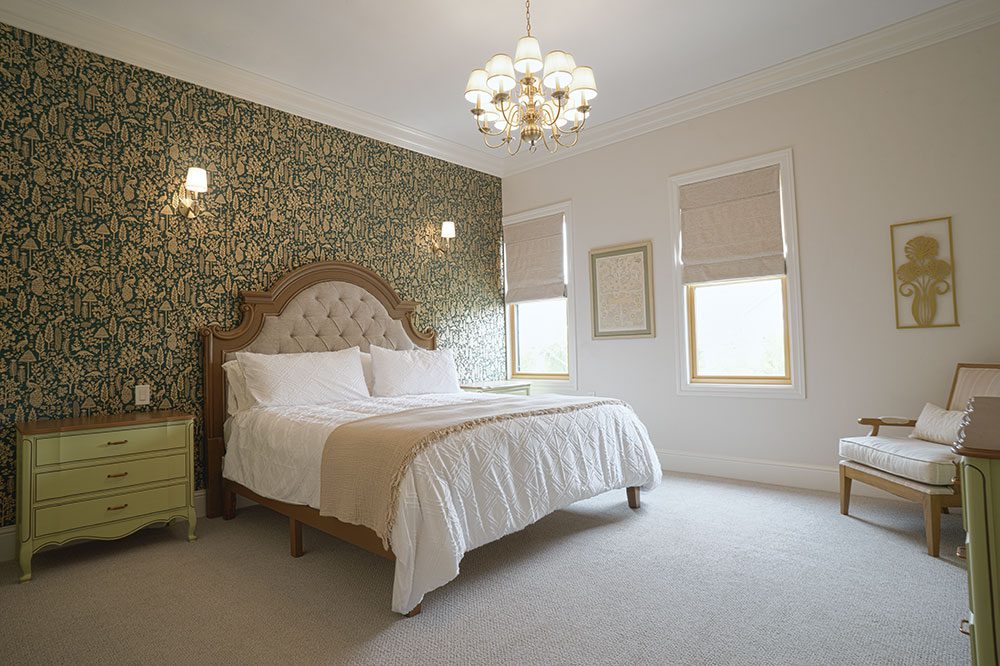
Built in 1905 as the Hotel Mosconi, the San Benito House Historic Inn is the oldest continuously operating hotel on the San Mateo County Coastside. Located on a prominent corner in downtown Half Moon Bay, the hotel has welcomed generations of travelers, including stagecoach drivers who traveled the coastal route long before modern highways connected the region. Its roots stretch back even further to the late 1800s, when Spanish immigrant Estanislao Zaballa established a saloon and general store on the site, creating one of the coast’s earliest commercial gathering places. As the town evolved from an agricultural settlement into a popular seaside destination, the landmark remained a gathering place for locals and visitors alike. Today, the beautifully restored inn preserves its Victorian-era character while offering modern comforts just steps from Half Moon Bay’s shops, restaurants, beaches, and coastal trails.
The Los Angeles Athletic Club Hotel
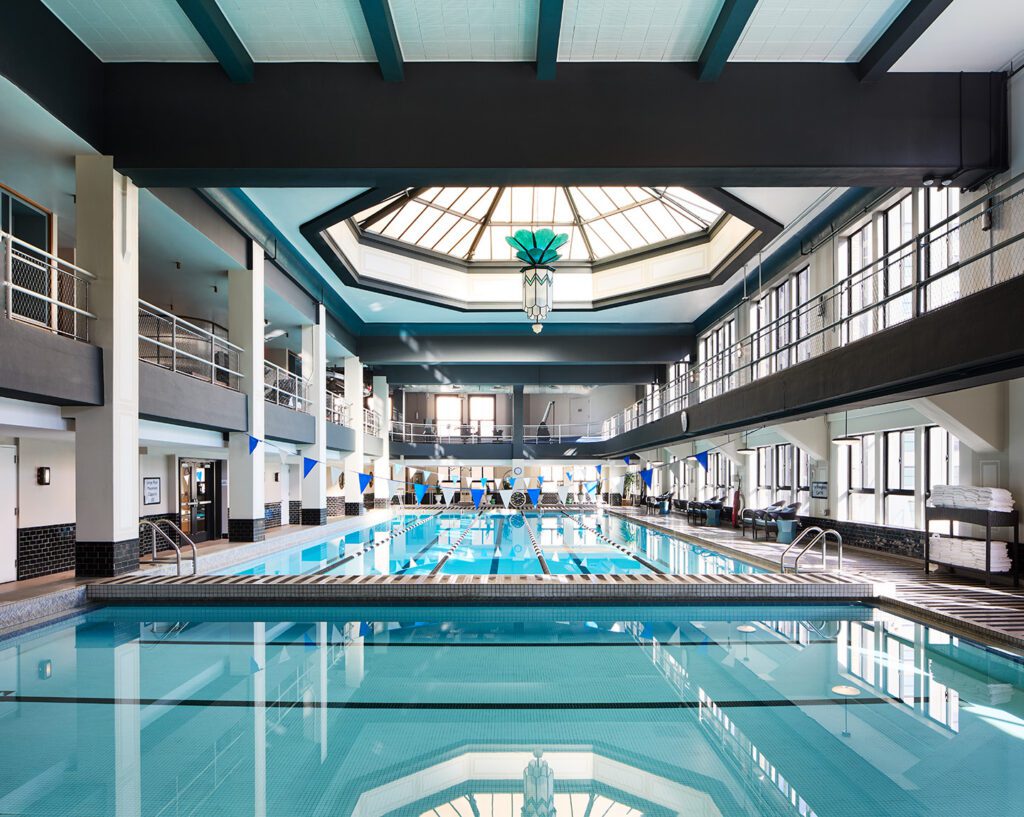
Founded in 1880 and housed in its iconic Beaux Arts building since 1912, The Los Angeles Athletic Club is the city’s oldest private members’ club and one of downtown L.A.’s most enduring landmarks. Designed by renowned architects John Parkinson and George Bergstrom, the 12-story clubhouse became a gathering place for athletes, entertainers, and business leaders who helped shape modern Los Angeles, including Charlie Chaplin, Mary Pickford, and Olympic champion Johnny Weissmuller. Overnight guest rooms offered exclusive stays for visiting members and their guests, while its celebrated sixth-floor swimming pool—believed to be the oldest elevated pool in Southern California—welcomed generations of athletes beneath a soaring skylight and an elegant chandelier. Today, overnight guests enjoy access to the storied club’s athletic facilities, restaurants, lounges, and collections of memorabilia, offering an immersive glimpse into more than a century of Los Angeles history.
Historic Requa Inn
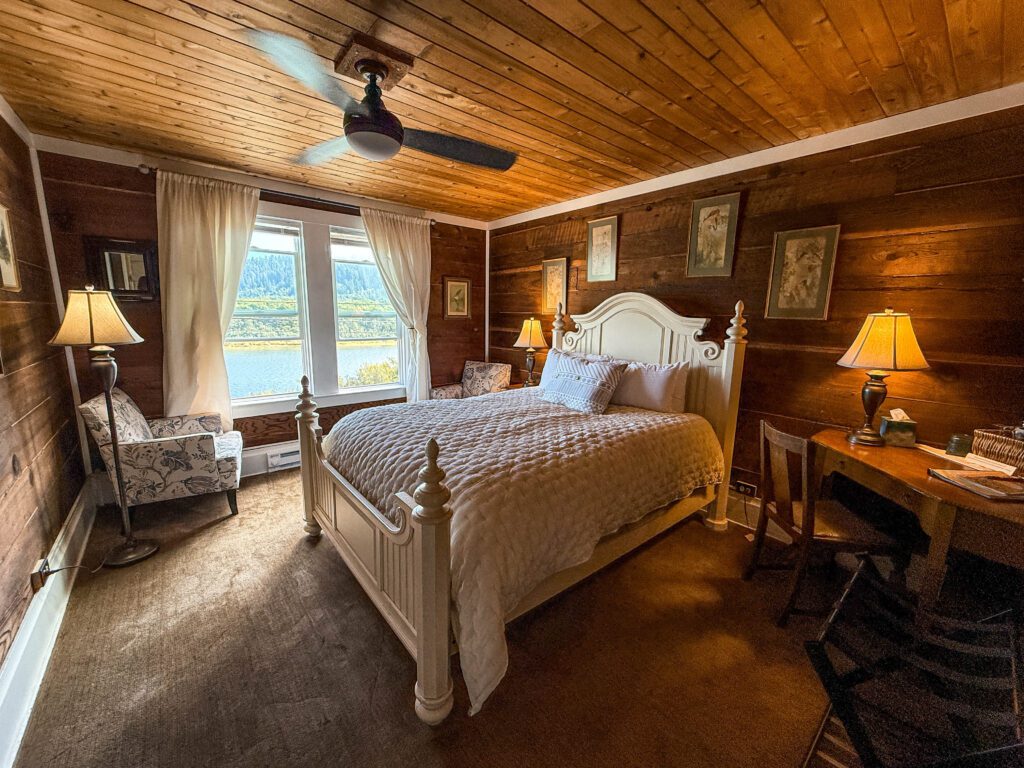
Built in 1914 after the original hotel was destroyed by fire, the Historic Requa Inn rose alongside the booming commercial salmon-fishing industry at the mouth of the Klamath River. Perched above the river on Yurok ancestral land, the Arts and Crafts-era inn welcomed fishermen, travelers, and workers drawn to one of California’s most remote and rugged frontiers. As the fishing industry declined, the landmark endured shifting fortunes and ownership before being restored by the family of a Yurok Tribal Elder, bringing the property’s story full circle. Today, guests can still browse historic photographs, scrapbooks, and an original guest register, while the inn’s original redwood walls and artifacts preserve a tangible connection to more than a century of North Coast history.
McCloud Hotel
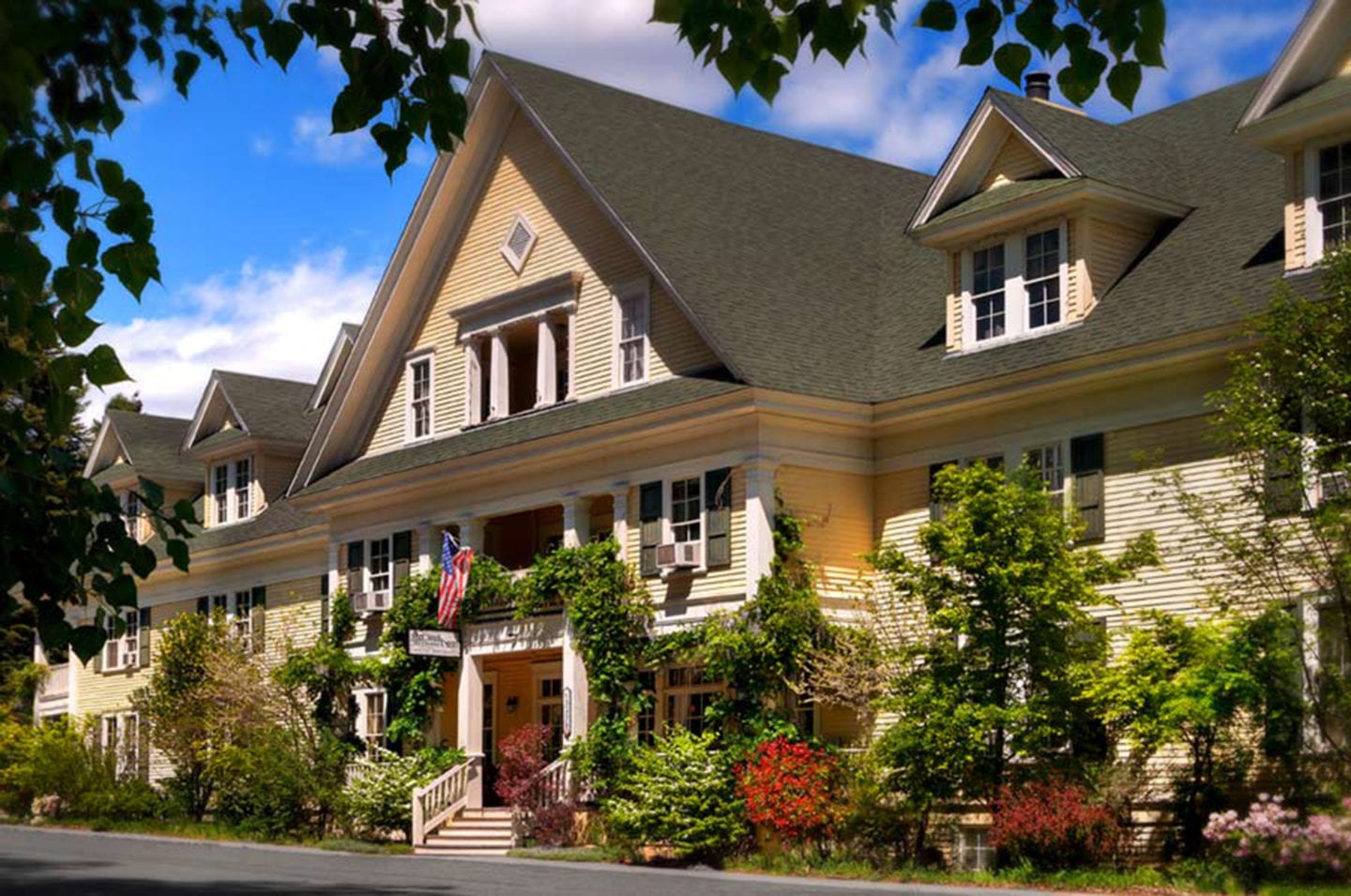
Built in 1916, the McCloud Hotel originally housed single men working for the McCloud River Lumber Company. The company’s large lumber mill operations helped make McCloud one of California’s most successful company towns. At the height of the lumber boom, the company owned nearly everything in town, from the hotel and mercantile to the homes where employees lived. Although many company towns disappeared as their industries declined, McCloud retained much of its historic character following its privatization in 1963. Today, the beautifully restored Arts-and-Crafts hotel showcases original architectural details, including a wood-burning fireplace flanked by built-in bookcases, box-beam ceilings, and the original registration desk, offering guests a glimpse into California’s bygone lumber days at the base of Mount Shasta.
El Encanto
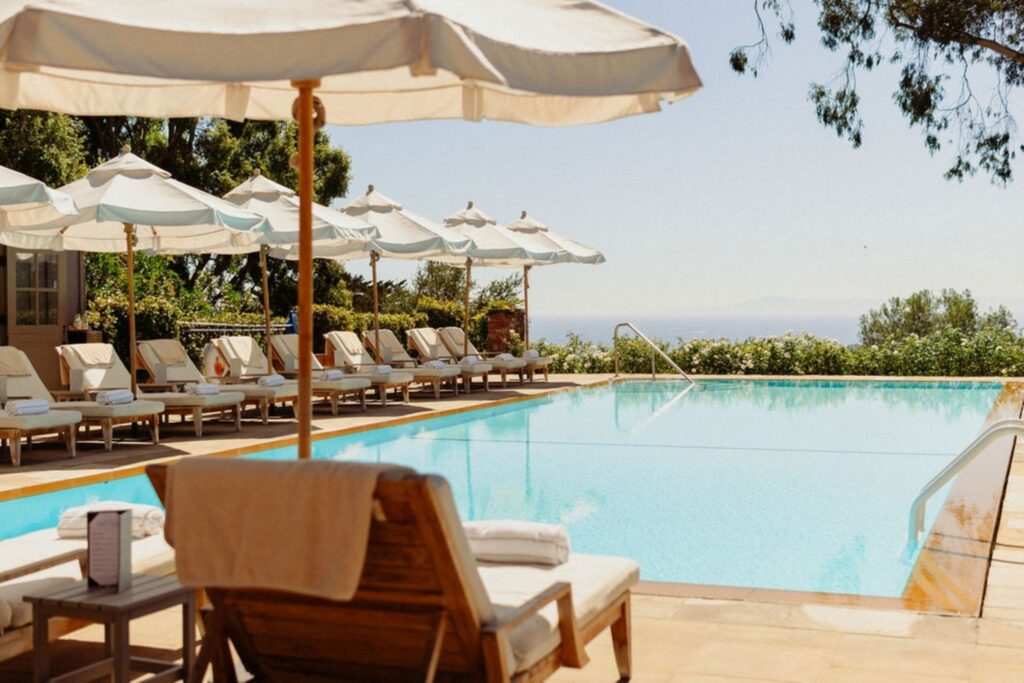
Perched high in the foothills above Santa Barbara, El Encanto opened in 1918 as a collection of California Craftsman-style cottages overlooking the Pacific Ocean and the Channel Islands. As Santa Barbara embraced its signature Spanish Colonial Revival aesthetic in the 1920s, the hotel expanded with elegant new bungalows featuring terracotta roofs, arched doorways, and wrought-iron details. The secluded hillside retreat soon became a favorite escape for Hollywood luminaries, including Clark Gable, Carole Lombard, and Hedy Lamarr. In 2004, El Encanto underwent a meticulous seven-year, $134 million restoration to preserve its historic cottages and gardens while introducing modern five-star luxury. Today, the storied resort continues to welcome guests with lush landscaping, enchanting ocean views, and timeless Santa Barbara charm.

Granada Hotel & Bistro
Built in 1922, the Granada Hotel & Bistro was originally designed as a hospital, complete with wide hallways to accommodate gurneys. But plans changed before construction was complete, and the building opened as a hotel beside San Luis Obispo’s popular Elmo Theatre. It became a gathering place for traveling performers, artists, and visitors during the Jazz Age. After decades as a hotel, followed by stints as residential housing and other businesses, the historic building was slated for demolition in 2010. Instead, a late-night conversation among four friends at Burning Man led to an ambitious plan to save the landmark and restore it to its original purpose. Reopened in 2012, the 17-room boutique hotel reflects a deeply personal vision, with carefully curated antiques, commissioned artwork, rich textiles, original hardwood floors, exposed brick walls, and even a hand-selected collection of books and music that breathe new life into one of downtown San Luis Obispo’s most distinctive landmarks.
The Cardinal Hotel
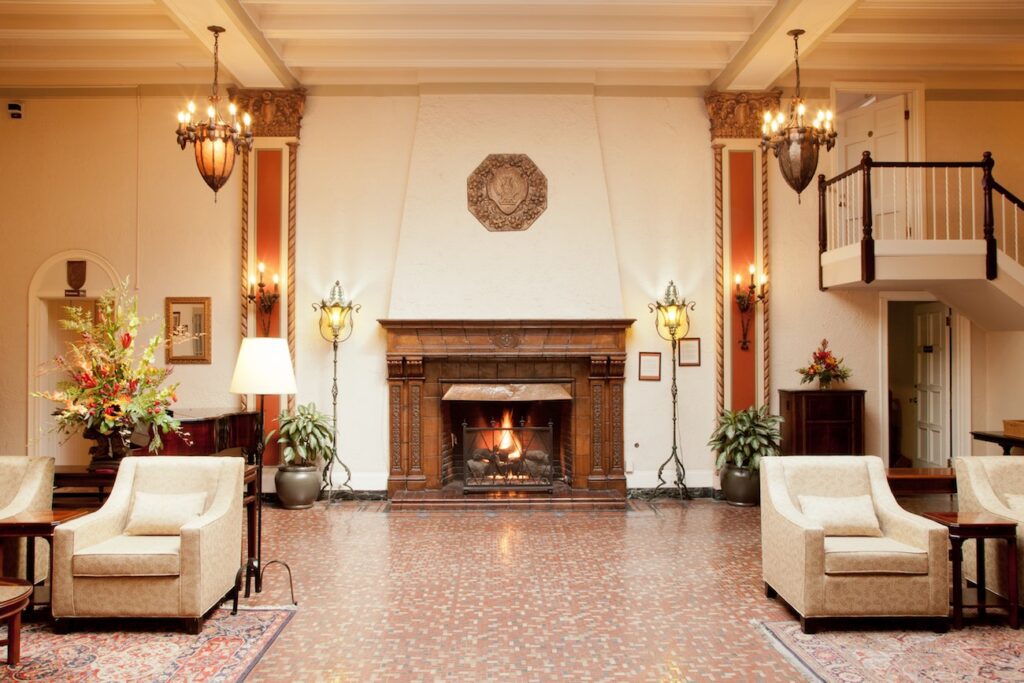
Built in 1924 in the heart of downtown Palo Alto, The Cardinal Hotel is one of the city’s most enduring architectural landmarks. Designed by renowned California architect William H. Weeks in collaboration with local architect Birge Clark, the hotel blends Spanish Colonial Revival styling with classical influences. Guests entering the historic lobby are greeted by original Spanish iron chandeliers, marble columns, hand-painted wooden beams, and carved ram’s heads. A vintage Bell System switchboard and a manually operated elevator offer rare glimpses into a bygone era. Since 1945, the property has been owned and operated by the Dahl family, making it one of the region’s longest-running family-owned hotels. Today, the landmark remains a welcoming centerpiece of Palo Alto’s historic downtown district.
Hotel Santa Barbara
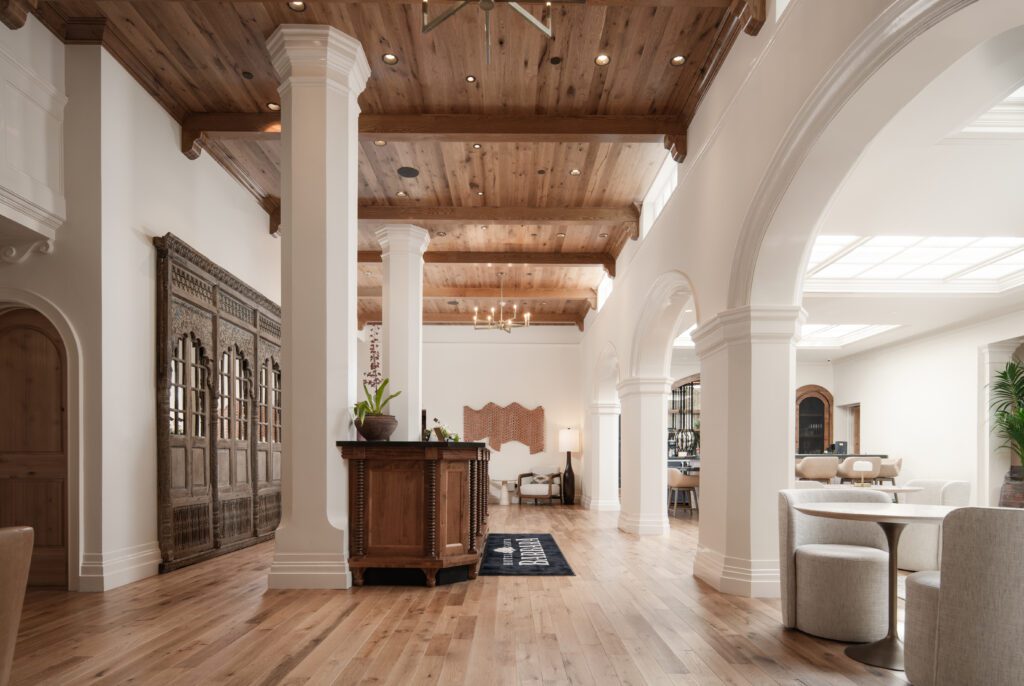
Hotel Santa Barbara traces its heritage to the original Santa Barbara Hotel, which opened in 1876 when the city was still a small pueblo. After the devastating 1925 earthquake destroyed the landmark, civic leaders seized the opportunity to reimagine downtown, embracing the Spanish Colonial Revival architecture that would come to define Santa Barbara’s character. Opened in 1926, Hotel Santa Barbara became part of that transformation, welcoming a new generation of travelers to the heart of State Street. Nearly a century later, a stunning renovation refreshed the landmark for a new generation while preserving signature architectural features, including its ornately carved exterior portico and the lobby’s striking archways and columns. The addition of 1926, a new, elegant lobby bar named for the year the hotel opened, honors the past while carrying forward a hospitality tradition that spans nearly 150 years.
Kit Carson Lodge
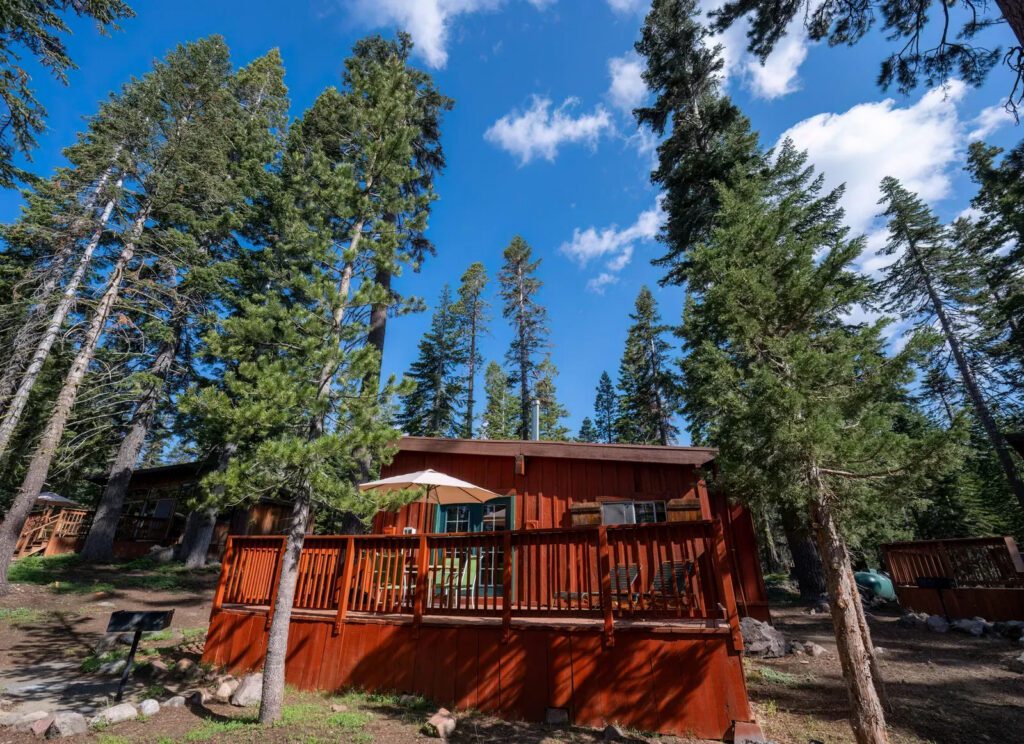
Built in 1926 on the shores of Silver Lake, Kit Carson Lodge has welcomed travelers to California’s High Sierra for 100 years. The rustic mountain retreat sits along the historic Carson Pass and Emigrant Trail, once traveled by Gold Rush-era wagon trains crossing the Sierra Nevada. Established by retired Army officer Captain A.O. Smith and named for famed frontiersman Kit Carson, the lodge became a basecamp for generations of anglers, hikers, and families exploring the surrounding mountains. While much has changed across California’s resort landscape, the lodge has remained true to its roots, with rustic cabins, a relaxed atmosphere, and traditions that have drawn some families back for five generations. Today, it remains one of the Sierra’s most enduring mountain retreats.
Inn at the Opera
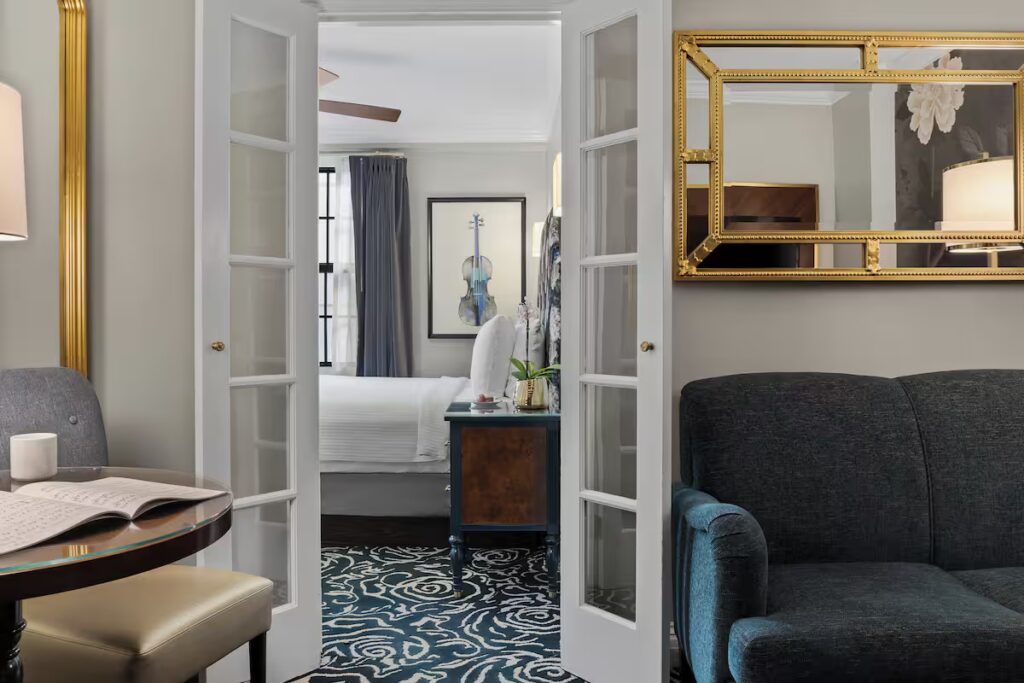
Located directly across from San Francisco’s War Memorial Opera House, the Inn at the Opera is deeply intertwined with the city’s performing arts heritage. Originally built as a residential-style property during the development of the Civic Center, the intimate building reflects an era when visiting artists, patrons, and affluent travelers sought extended stays near the city’s cultural institutions. As the San Francisco Opera and Ballet rose to international prominence, the neighborhood became synonymous with the arts, and the inn evolved into a welcoming retreat for performers and audiences alike. Today, thoughtfully refreshed interiors, European-inspired décor, and theatrical touches celebrate the property’s enduring connection to opera, music, and performance while preserving the charm of a classic boutique hotel in the heart of San Francisco’s cultural district.